
Why Steel Barriers Create Ongoing Damage
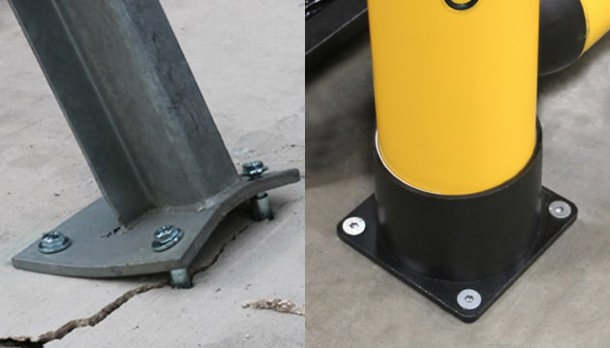
Floor Damage
Steel barriers cannot absorb impact energy. When they are hit, that force transfers into anchors and concrete floors, often leading to cracked slabs and costly repairs.
A-SAFE polymer barriers absorb and dissipate impact energy within the barrier.
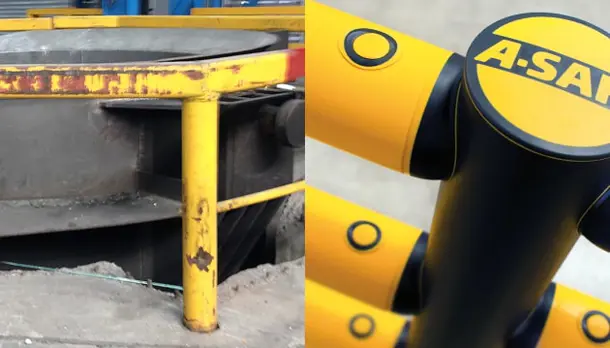
Ongoing Maintenance Cycles
Steel barriers often require repainting, repair and replacement after impacts.
A-SAFE polymer barriers do not rust, chip or require repainting, reducing maintenance time and cost.
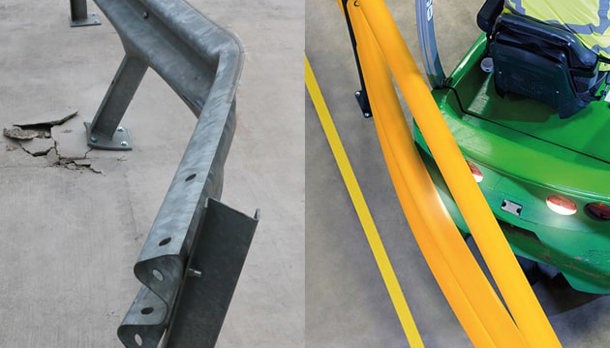
Frequent Barrier Replacements
Steel barriers permanently deform after impacts. Even minor collisions can bend or weaken the barrier, requiring frequent repairs or replacement.
A-SAFE barriers flex under impact and return to shape.

Infrastructure Damage
When steel barriers are struck, force travels through the barrier into surrounding structures, including racking, equipment, and building infrastructure.
Polymer barriers absorb the energy before it spreads through the facility.
The Benefits of A-SAFE Polymer Guardrails
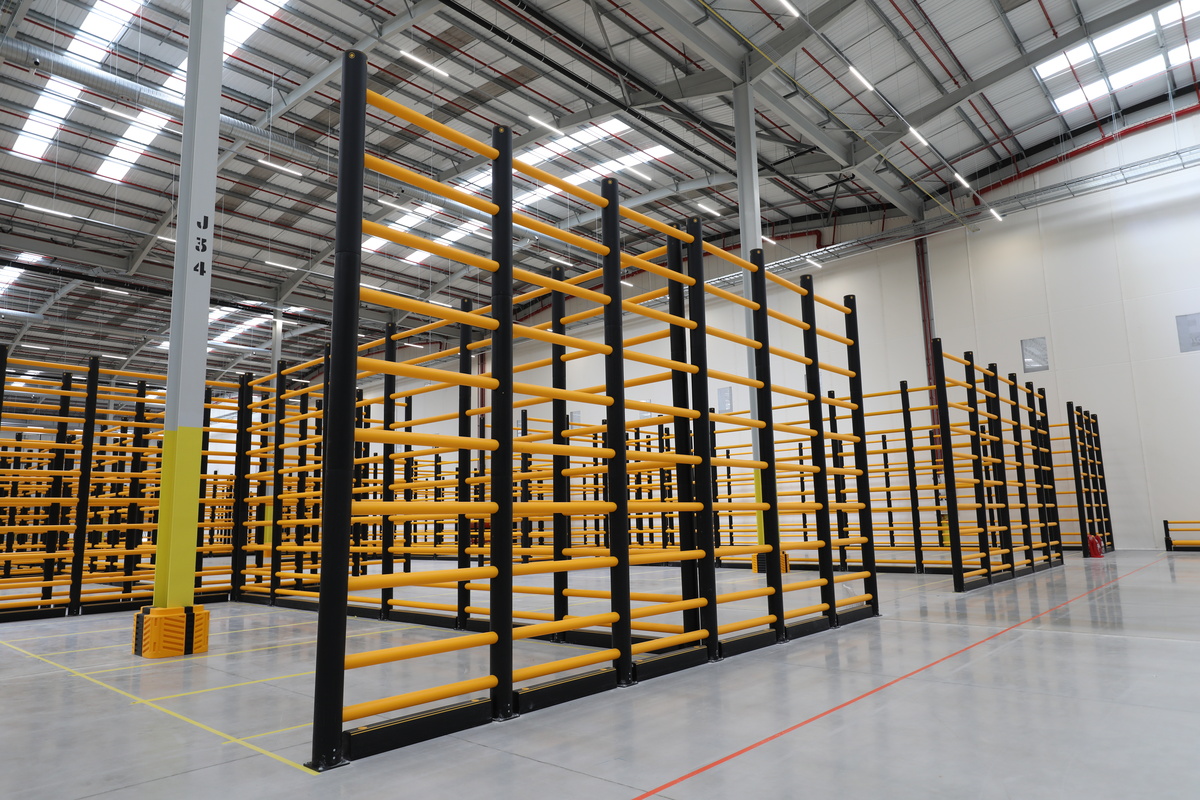
Unlike rigid steel barriers, A-SAFE engineered polymer barriers flex under impact, absorbing and dissipating energy within the barrier before returning to shape.
This helps prevent the force transfer that causes damage to floors, anchors, and surrounding infrastructure.
Energy Absorption
Engineered polymer barriers flex on impact, absorbing energy rather than transferring it into surrounding infrastructure.
Return to Shape
After impact, A-SAFE barriers recover their original shape instead of permanently deforming like steel.
Reduced Damage
By managing impact energy, polymer barriers help protect floors, equipment and vehicles
The ROI of A-SAFE vs Steel
On average, A-SAFE customers achieve a return on investment within 18 months.
We compared 300 ft of steel barrier with 300 ft of A-SAFE barrier in a busy warehouse. During the 60-day trial, steel’s lower upfront cost was quickly offset by repairs, replacements, and operational downtime.
See the ROI ComparisonSame impact. Completely different outcome.
Watch how steel and A-SAFE polymer barriers respond to the same forklift collision.
Steel crash barriers were invented in the 1930s for use on roads and highways. They haven’t changed since, and are too often a cheap, disposable approach to workplace safety. They are not designed to withstand the weights and forces in modern industrial facilities, resulting in massive long-term costs in frequent repairs and replacements.
Contact our safety experts today for your free, no-obligation consultation