A Similar Shape Does Not Mean Similar Performance.

Steel, basic polymer and A-SAFE engineered polymer can appear ready for the same job. The difference becomes clear under impact, through recovery and across repeated strikes.

Appearance Is Only The Starting Point

The Real Difference Appears Under Force.

At rest, barrier systems can appear to offer the same protection. Impact exposes how differently their materials and complete systems manage force.

Steel can remain permanently bent. Basic polymer can crease, split or lose shape. A-SAFE engineered polymer is designed to flex, manage energy and recover toward its original form.

Controlled testing shows how an A-SAFE barrier responds through contact, deflection and recovery.

Three Materials. Three Responses.

Compare What Happens After Contact.

The difference is not only what moves during impact. It is what remains damaged after the load is gone and whether the complete system is ready to protect again.

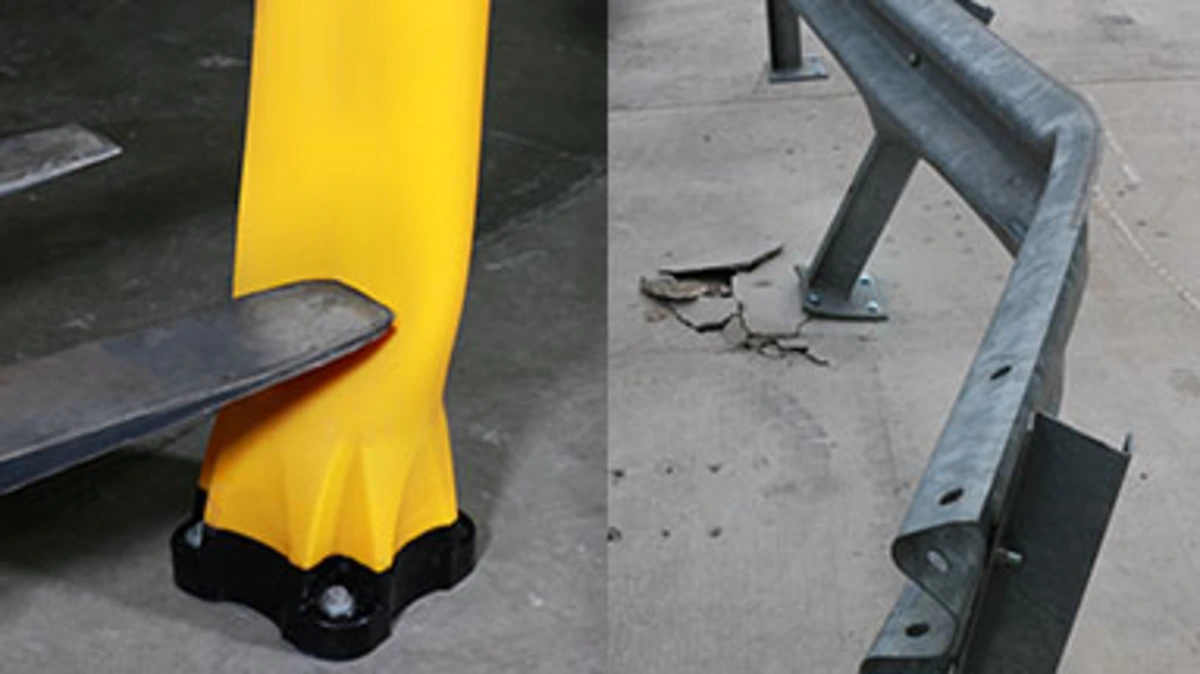
Visible deformation in a basic polymer barrier and a permanently bent steel barrier beside damaged concrete
Visible Failure

Permanent Deformation Changes The Result.

A barrier may remain standing while still losing its shape, damaging its surroundings or requiring repair before the area is fully protected again.

Basic Polymer

Localized crushing or material failure can prevent the system from returning to its intended form.

Steel

Permanent bending can leave the barrier, its fixings and the surrounding floor requiring attention.
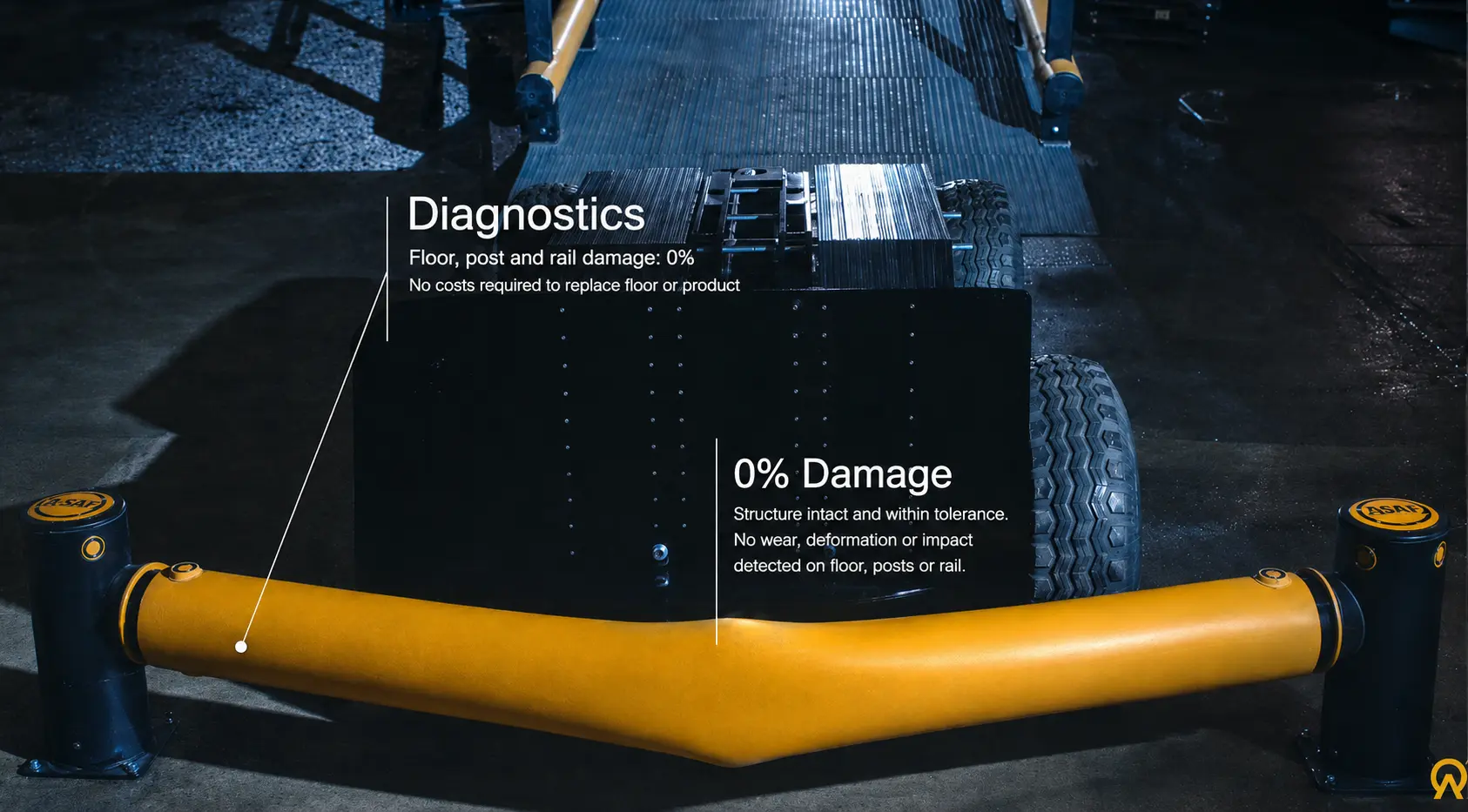
Post-test A-SAFE diagnostics showing the barrier, posts and floor intact after impact
Engineered Recovery

A-SAFE Is Designed To Flex And Recover.

A-SAFE engineered polymer systems are designed to manage impact through controlled flexing before recovering toward their original form.

Complete-System Review

Post-test inspection considers the rail, posts, fixings and floor rather than the rail alone.

Continued Readiness

Recovery helps the system remain prepared for the next impact without permanent steel-style deformation.

Engineered From The Material Out

Performance Starts Before The Barrier Is Installed.

A-SAFE performance is developed across the complete system, from material formulation to the way rails, posts, couplings and fixings work together.

A closer look at the advanced polymer system behind A-SAFE impact protection.

Material Formulation

Engineered material behavior determines how the barrier flexes, absorbs energy and returns toward its original form.

System Geometry

Rails, posts and connection points are designed to respond together rather than as isolated components.

Energy Management

Controlled deflection helps manage impact energy instead of relying on permanent rigidity.

Controlled Recovery

Recovery after impact is essential to continued protection and predictable performance.

Beyond A Single Demonstration

Repeated Impacts Reveal The Real Test.

Surviving contact is only one part of performance. The complete system should be examined during impact, after the load is removed and before it is expected to protect again.

At The Moment Of Contact

Testing observes how force moves through the rail, posts, connection points and fixings as the barrier responds.

After The Load Is Removed

Inspection identifies permanent deformation, material damage, movement at the fixings and damage to the floor.

Before The Next Strike

Recovery and continued readiness determine whether the system remains prepared to perform again.

One Pass Or Fail Moment Is Not The Whole Result.

Repeat performance depends on what happens to the entire installed system, not simply whether the barrier remains upright.

Choose With Evidence

Bring Engineering Into The Decision.

Barrier selection should be based on more than color, shape or a single impact demonstration. Tell us what moves through your facility, where protection is needed and what the system may need to withstand. An A-SAFE specialist can help you compare the right protection for your operation.

Talk To An A-SAFE Specialist

From Impact To Operations

Failure Does Not Stop At The Barrier.

When protection permanently deforms or damages its fixings, the consequence can move beyond the initial impact and into maintenance, safety and operations.

Barrier Repair

Permanent bending, cracking or material failure may require components or complete barrier sections to be repaired or replaced.

Floor And Anchor Damage

Force transferred into rigid posts and fixings can leave the surrounding concrete requiring additional inspection and repair.

Lost Protection

A damaged system may need to be taken out of service, leaving the area without its intended level of protection until work is completed.

Operational Disruption

Inspection, repair and replacement work can affect access, traffic routes and normal activity around the damaged area.

Start With Your Facility Find The Right Protection For Your Operation

Tell us what moves through your facility, where impacts occur and what you need to protect. An A-SAFE specialist will help you compare the right solution based on your traffic, risks and operating conditions.


To give you the best website user experience we use anonymized Google Analytics and Google Adwords tracking to report on website traffic. By continuing to browse this website you accept that cookies may be stored on your device. Learn more about our Cookies Policy and Privacy Policy.