
One Forklift Strike Shouldn't Turn into a Week of Maintenance.
Impact damage doesn't just damage the barrier. It triggers a chain reaction — assessment, work order, parts, downtime, repair. The barrier is usually the smallest cost in that sequence.
A-SAFE polymer barriers handle repeat contact without creating a maintenance event every time.
Fewer Repair Cycles
Barriers that handle impact and stay in position
Lower Total Maintenance Cost
Less downtime, fewer replacement orders, and no progressive floor damage
Defined, Protected Zones
Clear separation between vehicle traffic, pedestrians, and equipment
Where Protection Belongs in Manufacturing Facilities

Production Equipment
Machinery sits close to forklift routes by necessity. One impact at the wrong angle means downtime. A-SAFE barriers create a protection zone that handles repeat contact.

Forklift Traffic Routes
High-frequency routes take constant contact. A-SAFE traffic barriers stay in position shift after shift. No buckled sections, no loose anchors.

Pedestrian Walkways
Physical separation between foot traffic and vehicles is the most effective risk reduction available. A-SAFE guardrails hold position even after vehicle contact.
The Material Difference
Steel Barriers
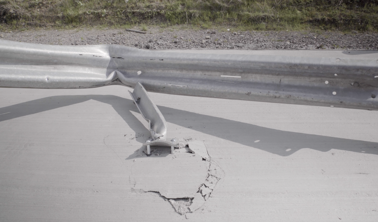
Steel:
- Transfers force into anchors and concrete
- Bends or buckles after significant hits
- Higher replacement frequency
- Progressive floor damage over time
Polymer Barriers
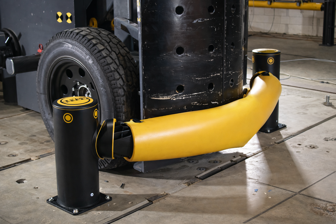
Polymer:
- Absorbs energy through the material
- Returns to position after contact
- Lower replacement frequency
- Minimal anchor and floor stress
Manufacturing Case Studies
Case Studies


Why the material matters
What Happens When a Forklift Hits a Barrier — and Why the Material Makes All the Difference.
Steel transfers impact force into your anchors and floor. That damage is invisible at first — and cumulative over time.
A-SAFE polymer manages that energy through the material itself. The barrier takes the contact, handles it, and comes back to position. Every time.
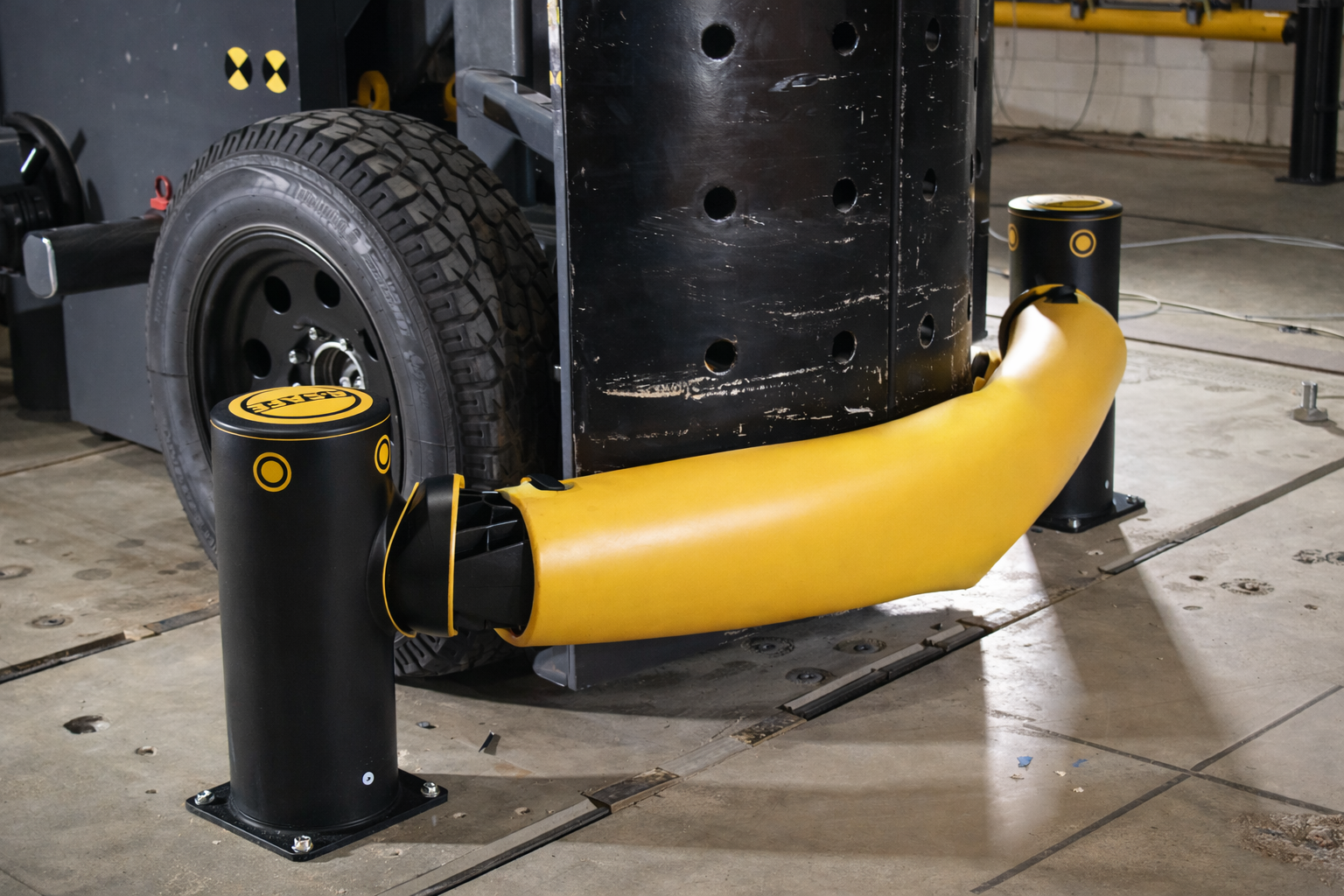
Takes the Hit
Impact energy absorbed through the composite material — not passed to the floor.
Returns to Position
Back in place before the next shift. No buckled sections, no loose anchors.
Consistent Repeat Performance
Tested across multiple impact cycles, not just one. Behavior is predictable every time.
Protects the Floor
Minimal force into anchors and concrete — no progressive damage building underneath.
Built for impact. Tested to prove it.
Every A-SAFE barrier is validated through real-world impact testing: pendulum, ramp, and repeat-cycle. Not just a single-hit rating.





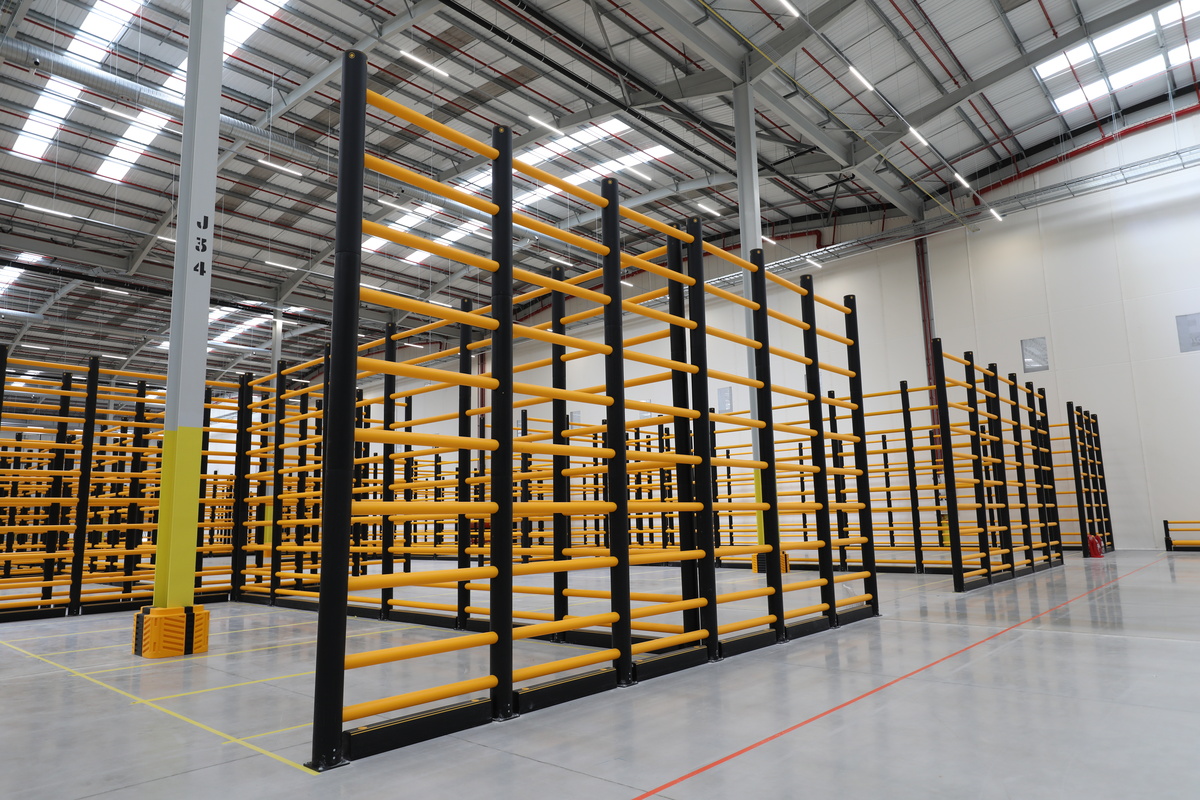
Talk to a specialist who knows manufacturing environments — not just barrier catalogs.
Fill out the form and an A-SAFE specialist will review your environment and come back with specific recommendations for your highest-risk zones. No generic quote. No pressure. Just useful guidance from someone who's worked with facilities like yours.