IMPACT + REBOUND
What happens during and after contact?
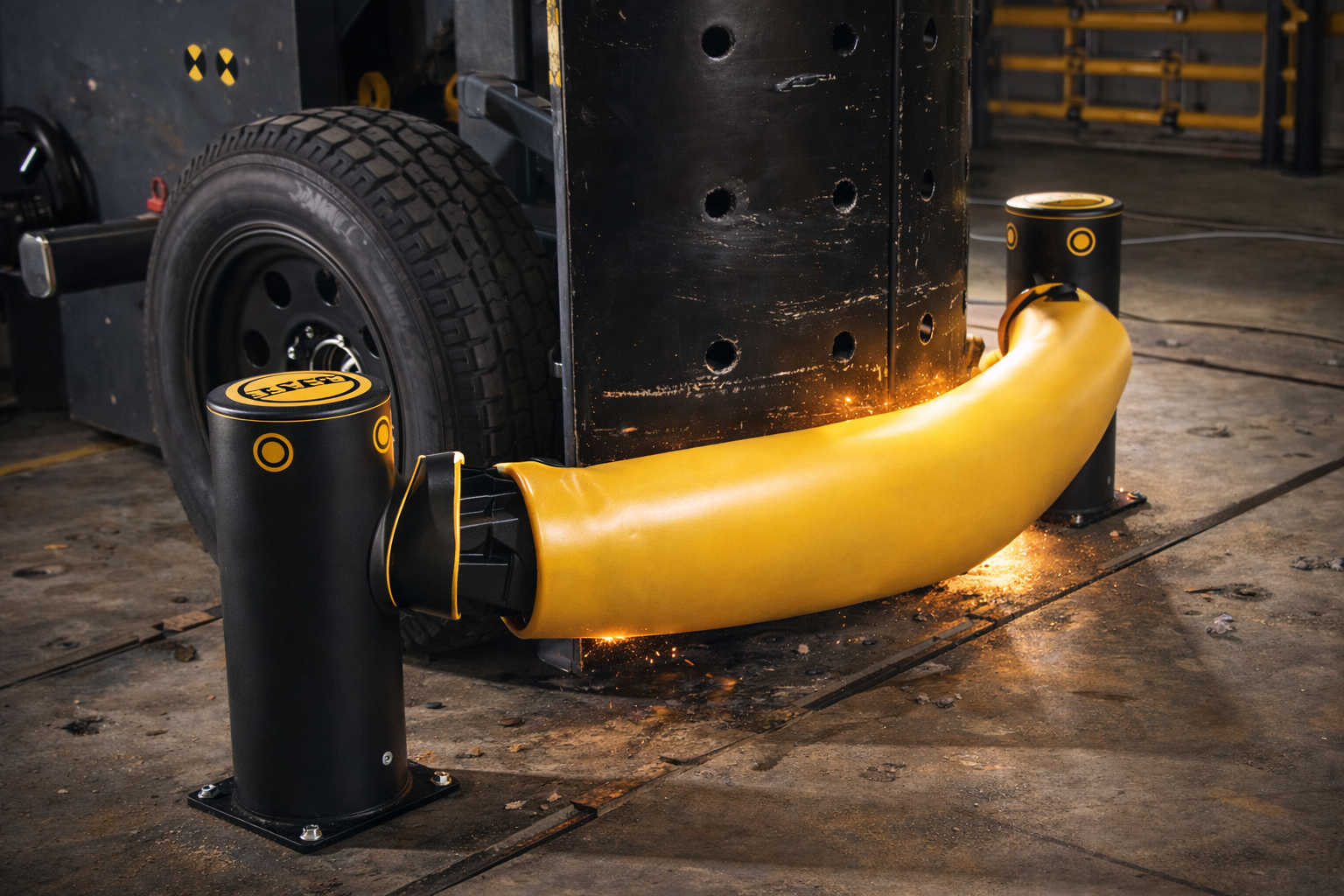
Shows how protection responds during contact and after the force is removed. That matters when traffic needs to keep moving after an impact.

HIGH-TRAFFIC LOGISTICS
The route reopens. The next shift starts. Forklifts return to the same turns, rack ends and transfer points. That is why performance after contact matters just as much as performance at contact.
FIRST
How does the protection respond when a vehicle makes contact?
THEN
What happens to the barrier after the impact force is removed?
WHAT MATTERS NEXT
How does it perform when the same busy zone faces contact again?
ONE IMPACT IS ONLY THE BEGINNING.
Logistics protection should be evaluated for the work that comes next.
PROOF BEATS PROMISES
Testing shows how protection responds under different forces, repeated exposure and changing operating conditions. It turns “built for impact” into something that can be evaluated.
IMPACT + REBOUND
Shows how protection responds during contact and after the force is removed. That matters when traffic needs to keep moving after an impact.
FATIGUE + REPEAT LOADING
Examines how material and system behavior change through repeated stress. This is especially relevant on routes that remain active across multiple shifts.
MATERIAL BEHAVIOR
Tensile, compression and flexural testing examine material behavior under different forces. Similar-looking barriers may not respond in the same way.
ENVIRONMENT + TIME
Temperature, chemical exposure and degradation over time can affect material behavior across docks, storage zones and other operating environments.
Look beyond the claim. Ask what was tested and what the results actually prove.
APPEARANCE IS NOT PERFORMANCE
Two barriers can share a color and shape. That does not tell you how the material will behave when force is applied or what happens after contact.
What happens when the barrier first makes contact?
What happens after the impact force is removed?
How does the system respond when exposure happens again?
A-SAFE introduced the first industrial polymer barrier. The difference was never just the color. It was a new way to manage impact.
ACROSS THE FACILITY
Impacts in logistics facilities are rarely spread evenly. They concentrate where vehicles turn, routes narrow and moving equipment comes close to people or fixed assets.
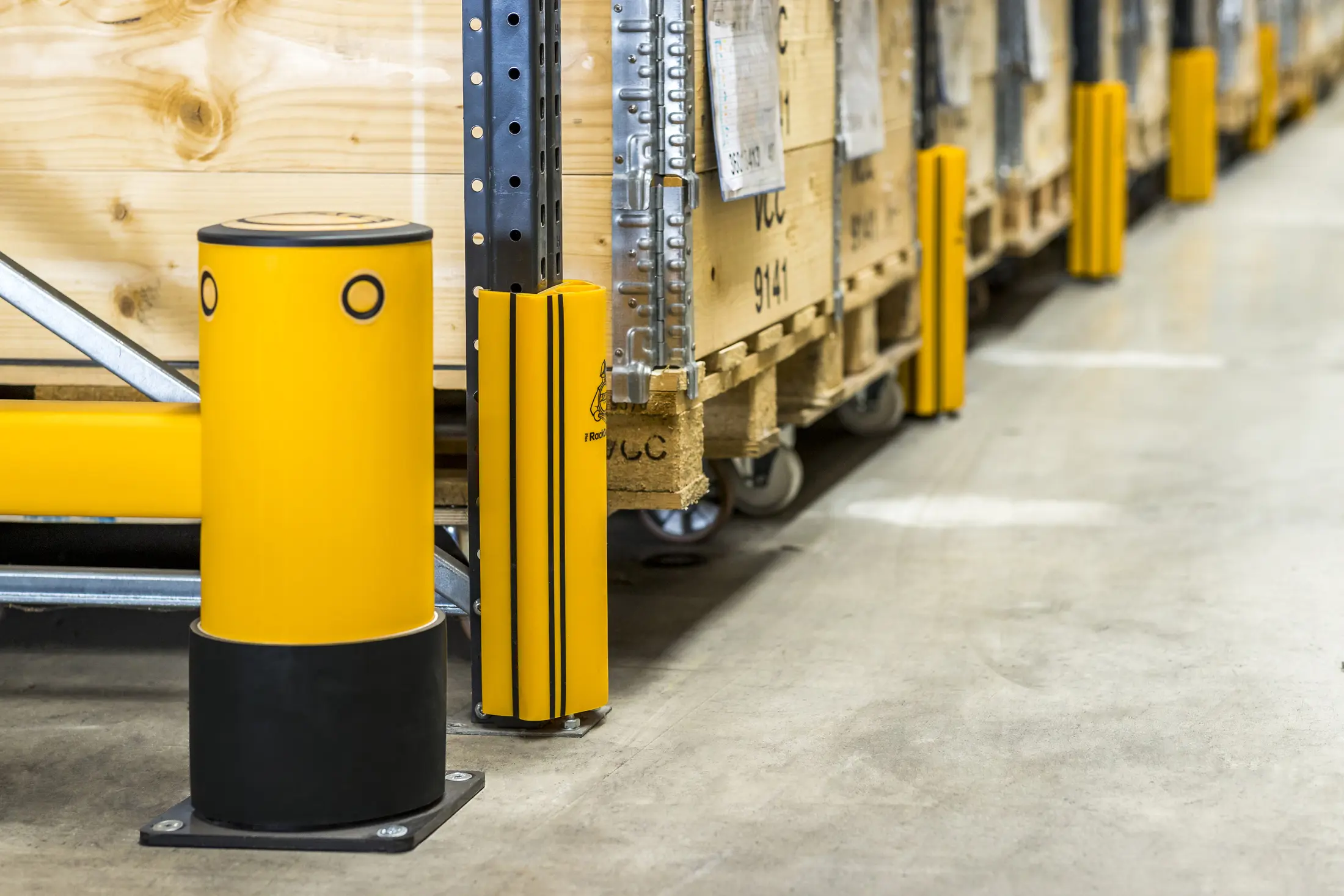
Repeated contact can affect racking, inventory and building infrastructure. Protection should match the route and asset at risk.
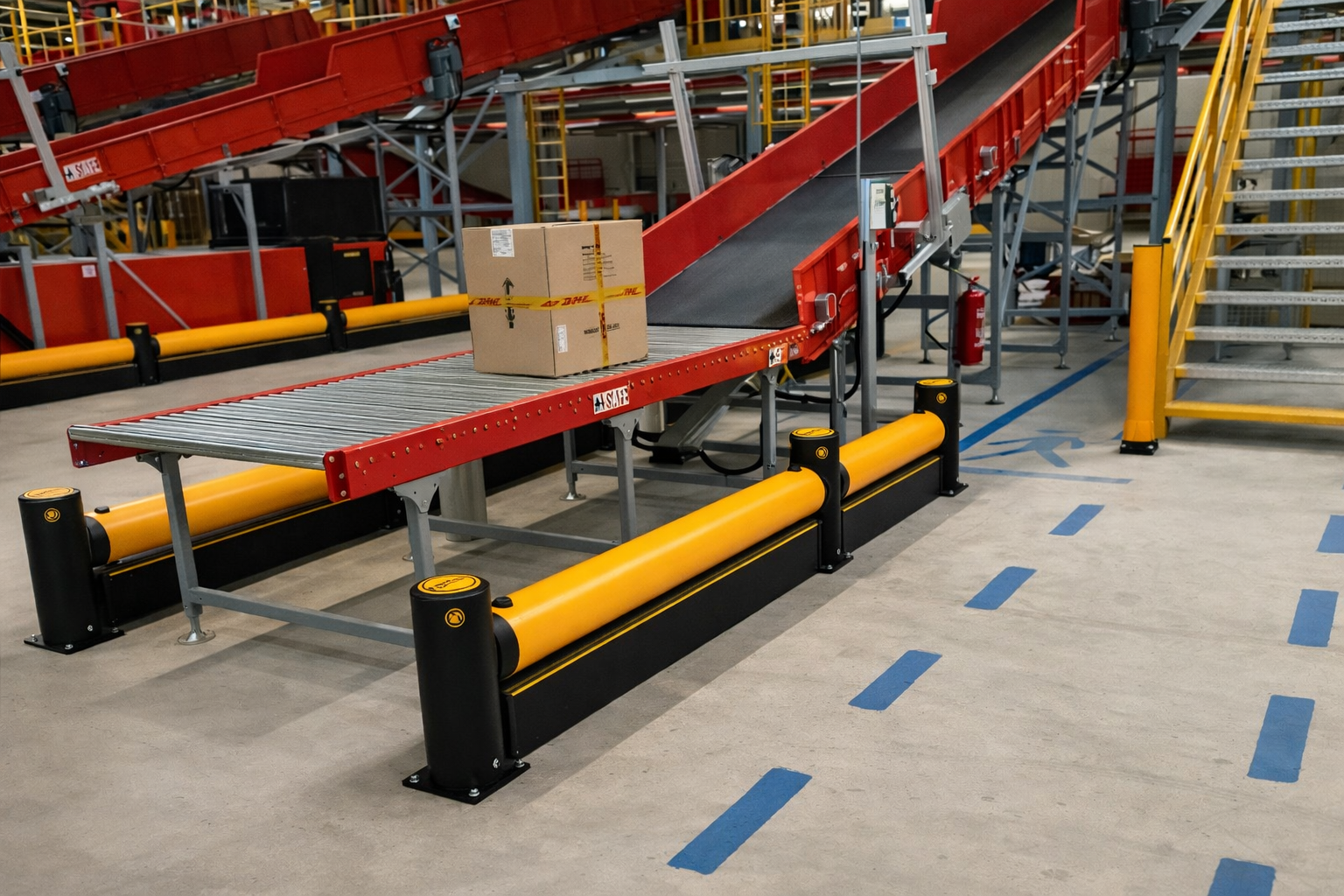
An impact near sortation or handoff equipment can interrupt movement beyond the visible damage.
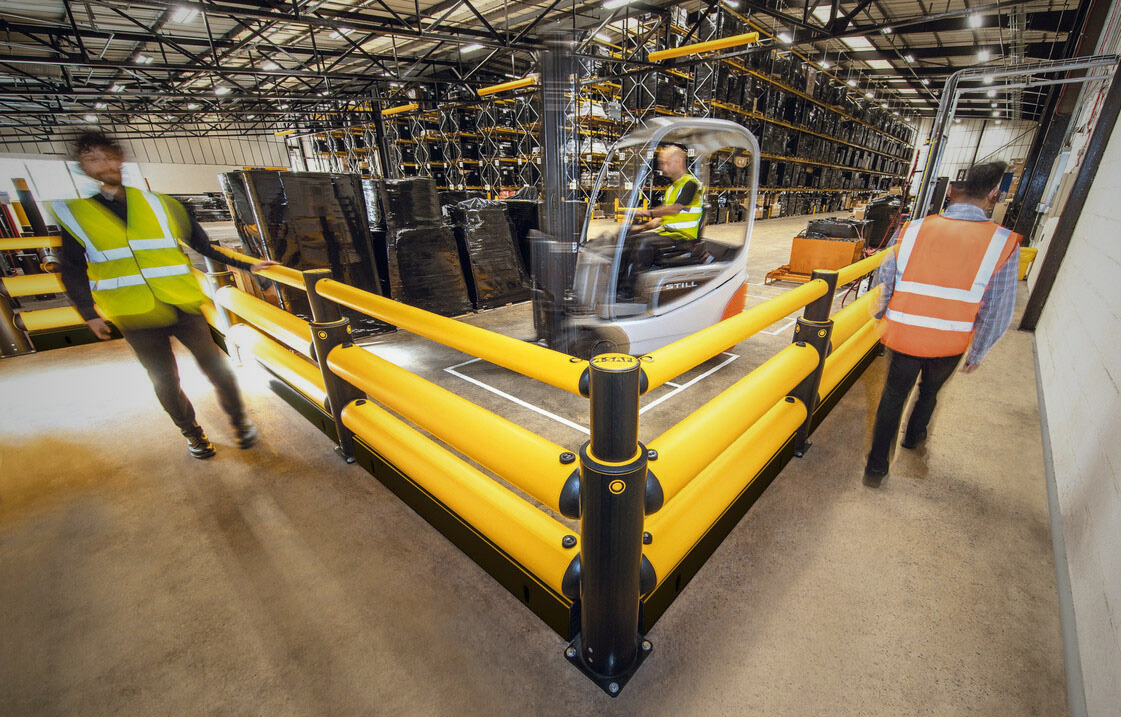
Floor markings guide traffic. Physical barriers create a defined boundary between people and moving equipment.
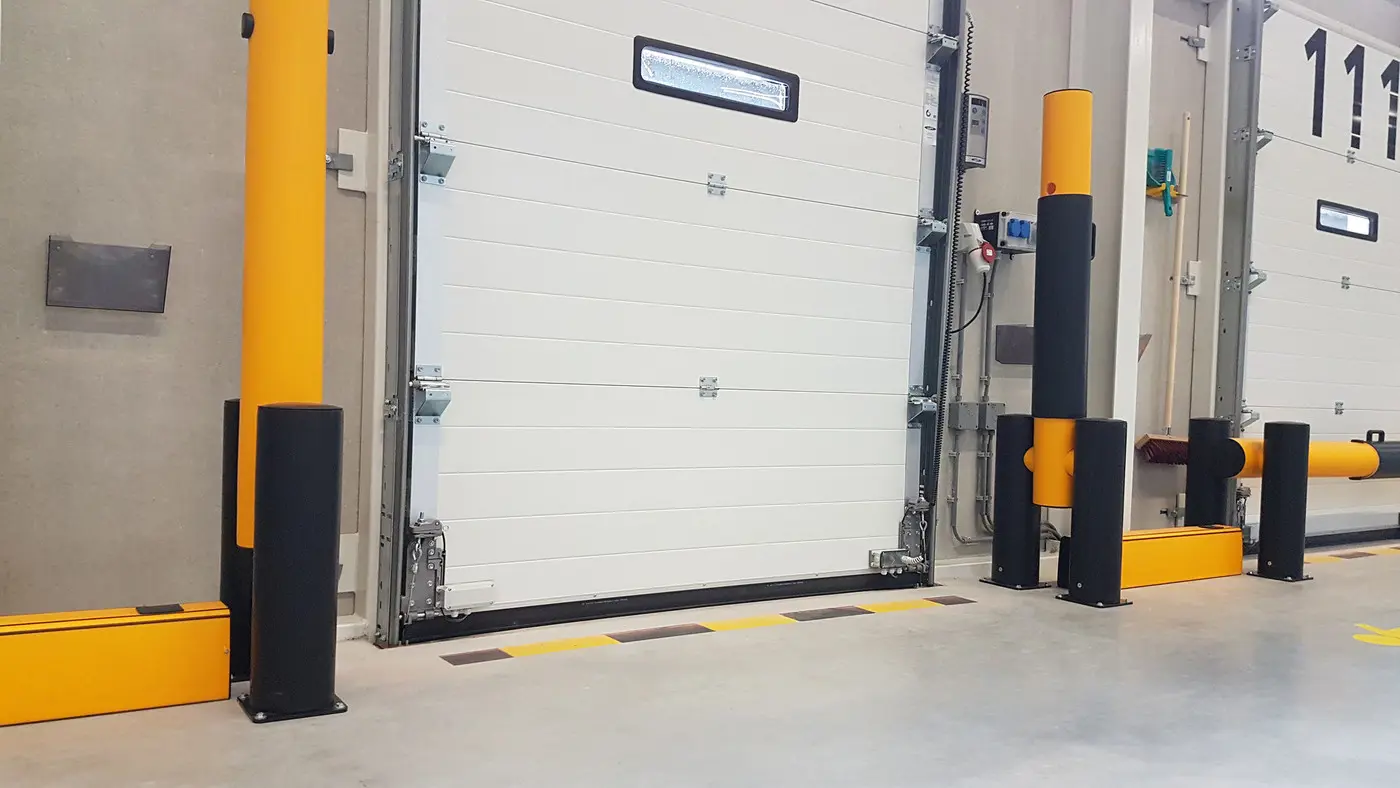
Tight approaches, reversing vehicles and changing traffic patterns make consistent protection especially important.
Physical boundaries make pedestrian and vehicle routes clearer.
Protection designed for repeated exposure can help limit reactive repair cycles.
Teams have a clearer understanding of where protection is needed and what performance to evaluate.
Predictable barrier behavior supports a more predictable operation.
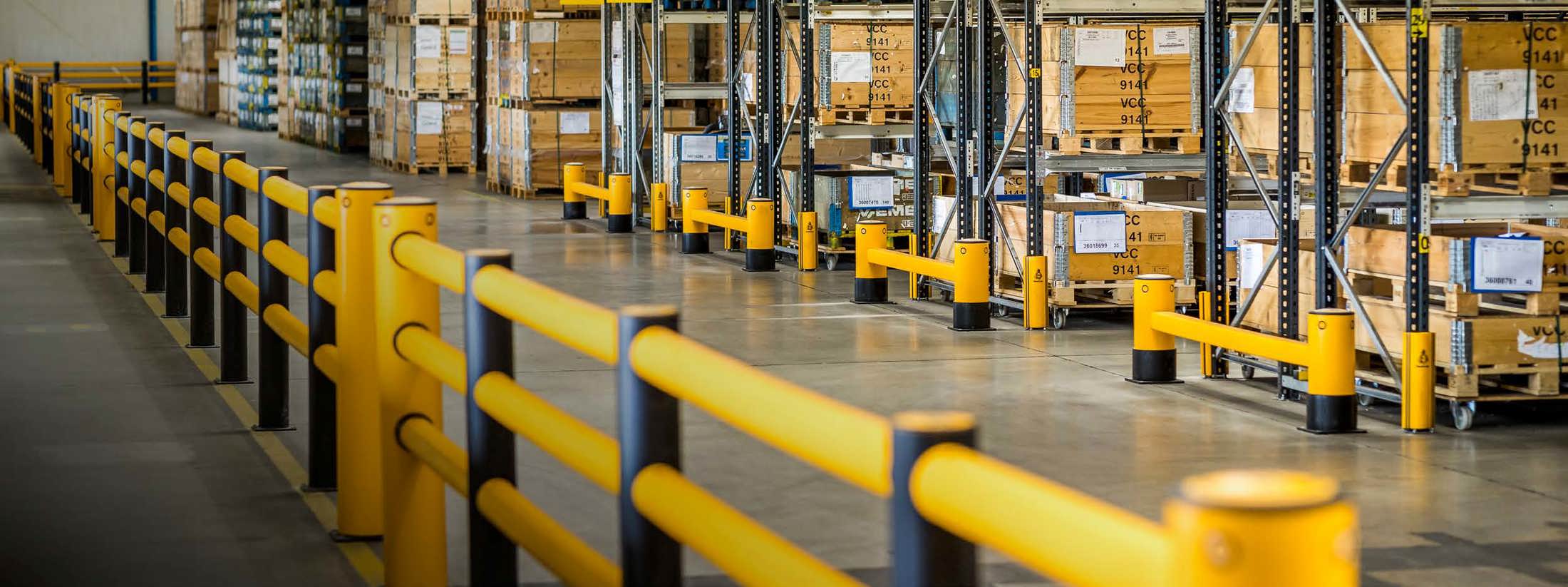
Our team will review your operation and recommend a protection layout built around where your risk is highest. No generic catalog. No guesswork.