Dynamic Impact Testing
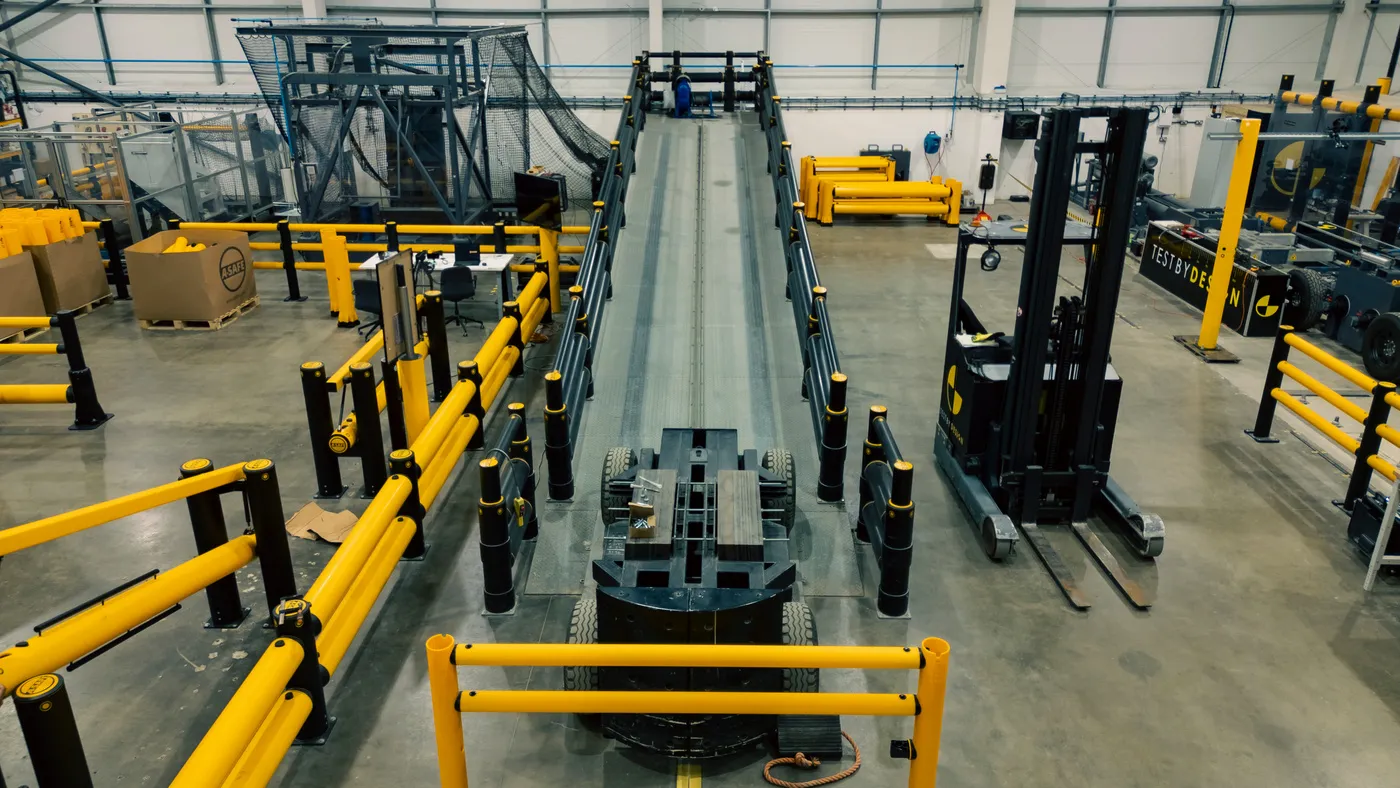
Controlled impacts evaluate how the complete system responds to defined vehicle weights, speeds, angles, and contact points.

Performance Has To Be Proven
Two barriers can share the same color, shape, and purpose while responding very differently under force. The difference only becomes clear when performance is measured under controlled conditions.
A-SAFE testing examines how the complete system flexes, manages energy, recovers, and continues to perform after the first strike.
Discuss Your Facility RequirementsMore Than A Single Impact
Reliable performance depends on more than surviving one demonstration. Testing should examine the material, the complete barrier system, and the conditions it may face throughout its service life.
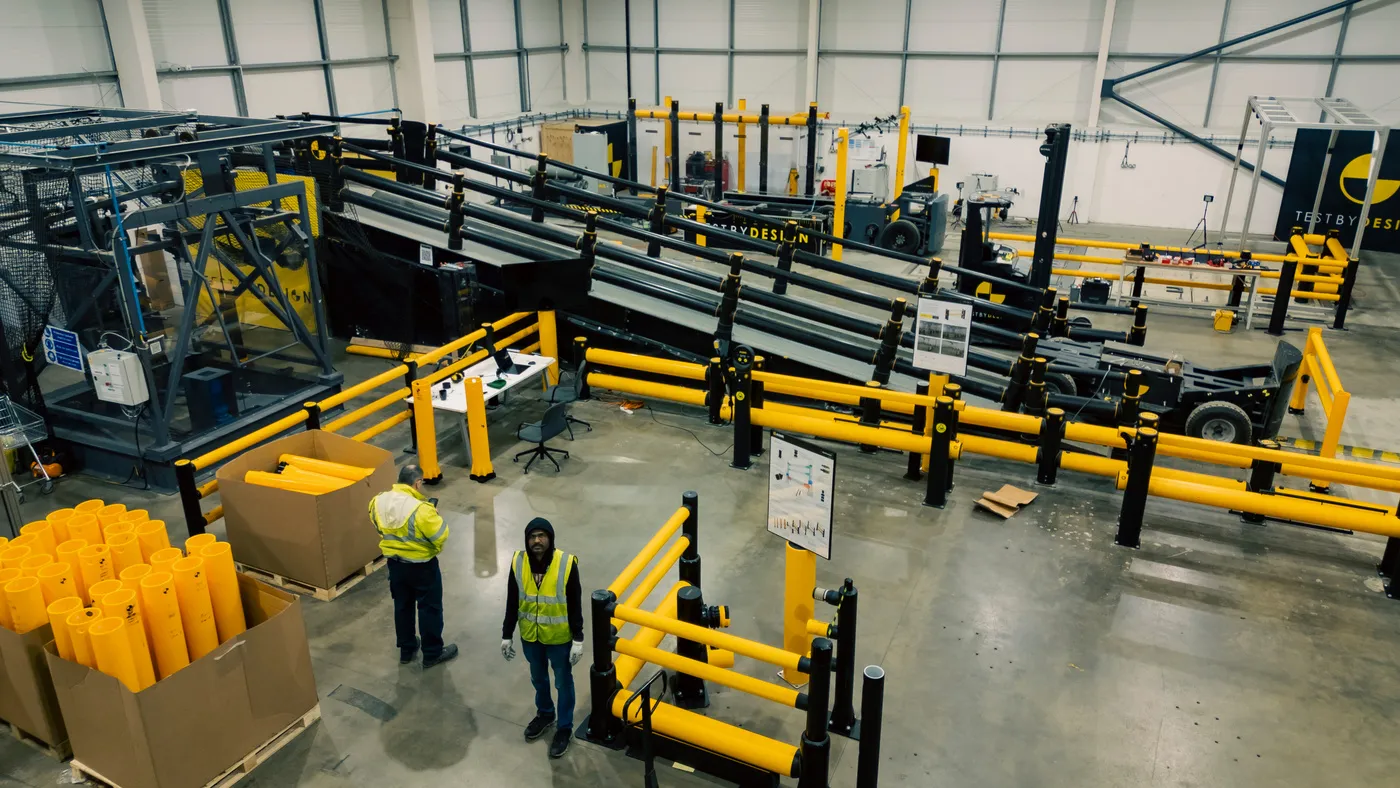
Controlled impacts evaluate how the complete system responds to defined vehicle weights, speeds, angles, and contact points.
Tensile, compression, and flexural tests measure strength, flexibility, deformation, and material behavior under load.
Fatigue and rebound testing examines recovery and continued performance across repeated loading cycles.
Temperature, chemical, and degradation testing evaluates how material performance changes in demanding environments.
Documented And Independently Verified
Recognized testing frameworks create consistency around how performance is evaluated and documented. Independent verification adds another level of confidence behind the result.
ANSI MH31.2
A consistent method for evaluating industrial guardrail performance under defined impact conditions in North America.
PAS 13
Published by BSI, PAS 13 provides guidance for the application, impact testing, and documentation of workplace safety barriers.
TÜV NORD
Independent observation and verification help confirm that testing follows defined criteria and that performance claims are supported.
Beyond The First Strike
The real test is what happens after contact. A successful result should consider the barrier, its posts and fixings, the floor beneath it, and whether the complete system remains ready to perform again.
Controlled Impact
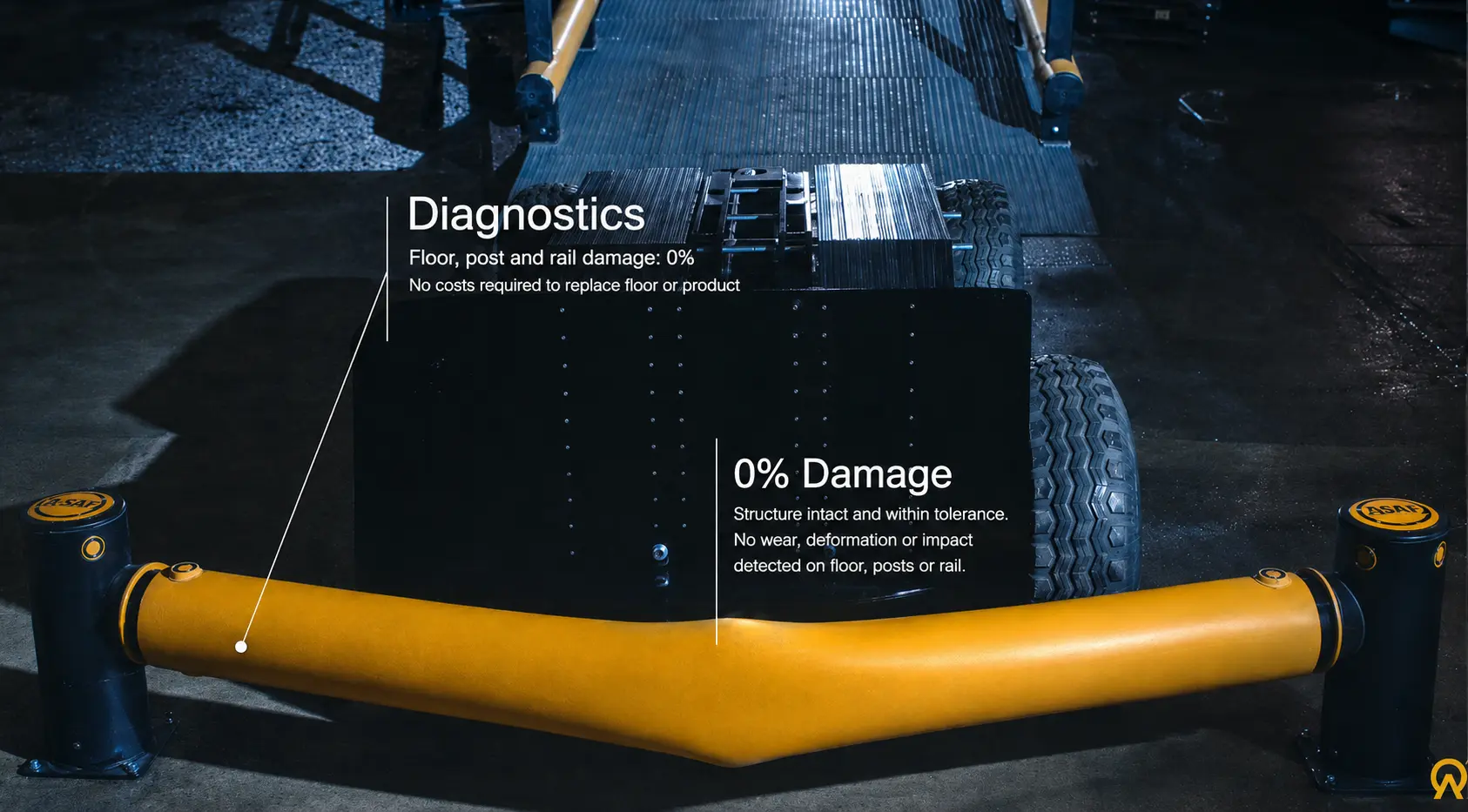
Multiple camera angles show the barrier flexing under force before returning toward its original position.
Documented Result
Post-test inspection helps identify deformation, product damage, floor damage, and whether the system remains within its performance tolerance.
Bring Proof Into The Decision
Tell us what moves through your facility, where protection is needed, and what conditions the system must withstand. An A-SAFE specialist can help you evaluate the right protection based on documented performance.
Tell us a little about your facility, traffic risks or current safety priorities. An A-SAFE specialist will help you explore the right protection for your operation.