Where Impact Risk Lives in Your Facility
Saint-Gobain Sites Run on Movement. So Does the Risk.
Every zone where vehicles, people, and equipment share space is a zone where impact protection matters.

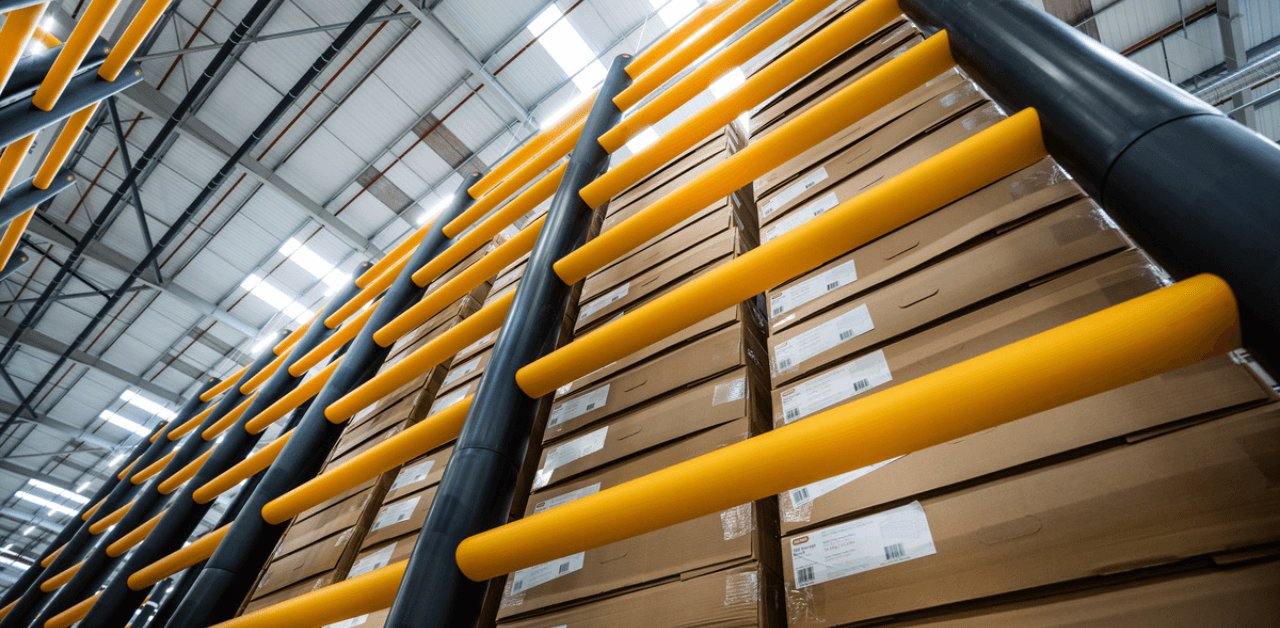
Aisle ends and rack uprights take repeated low-speed impacts that add up over time. Damage to racking is rarely isolated: it creates inspection obligations, potential collapse risk, and storage interruptions. End-of-aisle and upright protection helps absorb those impacts before they become structural problems.

Production environments depend on tight vehicle and pedestrian routes operating close to machinery, raw material zones, and finished goods. When a vehicle strikes a machine guard, column, or floor fixture, the effect can ripple across adjacent processes. Defined, protected routes help reduce that risk.

Dock doors, bay columns, and loading infrastructure absorb daily vehicle movement. Repeated strikes to dock surrounds and door frames create cumulative damage that compounds maintenance costs. Dock protection and bay barriers help absorb that impact before it reaches the structure.

Charging zones concentrate pedestrian traffic, powered vehicles, and high-voltage equipment in a small footprint. A single impact near charging infrastructure can trigger downtime, safety reviews, and costly repair cycles. A-SAFE protection helps create a reliable buffer between vehicles and critical assets.
THE REAL COST OF IMPACT
A Vehicle Strike Rarely Stops Where You Can See It.
The barrier takes the hit. But the cost rarely ends there.
When a forklift or vehicle strikes a rigid steel barrier, that force has to go somewhere. It can transfer into the floor anchor, stress the concrete slab, and travel into surrounding structure. Over time, repeated impacts that appear minor can create cumulative floor damage, anchor fatigue, and infrastructure wear that only becomes visible when the repair bill arrives.
Beyond the structure, there is operational cost. A damaged barrier triggers inspection. An inspection can trigger rerouting. Rerouting creates delays. Delays cost time. And if the barrier needs replacing rather than recovering, add lead times, labour, and floor reinstatement to the list.
The problem is not just the impact. It is what a system that cannot recover forces you to do next.
Barriers that transfer force into your floors and anchors are not absorbing impact. They are delaying it.
HOW A-SAFE WORKS
Protection That Absorbs, Dissipates, and Recovers.
A-SAFE barriers are not designed to resist impact. They are designed to manage it.
Rigid steel systems transfer force into anchors, floors, and surrounding structure. That is how damage spreads.
A-SAFE polymer barriers work differently. They flex on impact, manage energy within the barrier body, and recover their shape so the operation can continue.
This is not a compromise on strength. It is a different approach to what protection should do.
Engineered to flex and recover
Polymer barriers return to shape after impact, reducing the need for immediate replacement.
Reduced floor and anchor stress
Force is managed within the barrier body, not transferred into your concrete slab or fixings.
Built for repeat impacts
High-traffic environments demand protection that performs impact after impact, not just once.
Safer segregation between zones
Defined, protected corridors help manage movement between pedestrians, vehicles, machinery, and critical infrastructure.
Lower long-term repair cost
Fewer replacement cycles, less floor reinstatement work, and less unplanned downtime.
Lifecycle performance
A-SAFE barriers are designed to perform over years, not just absorb one event and get replaced.
WHY THIS MATTERS FOR SAINT-GOBAIN SITES
Your Facilities Run Close to the Edge. By Design.
Saint-Gobain sites are complex production environments where people, vehicles, materials, and high-value equipment often operate in the same active space.
From glass and ceramics to construction materials and insulation production, impact risk is not limited to one area. It can live around production floors, raw material zones, shipping bays, charging stations, and internal transport routes.
That is why impact protection matters operationally. A system that absorbs impact, protects floors and anchors, and keeps routes open helps support the way these facilities need to run.
The Right Protection for Every Part of the Facility

Traffic Barriers
For internal vehicle routes and forklift corridors. Absorbs vehicle impact and helps define safe travel lanes across production and logistics zones.

Pedestrian Barriers and Guardrails
For walkways running alongside vehicle routes. Creates consistent segregation between foot traffic and moving vehicles without permanent rigid infrastructure.

Bollards
For exposed columns, doorways, corners, and structural points. High-impact polymer bollards protect critical fixed assets without anchoring force transfer into the slab.

Rack Protection
For aisle ends and upright frames in storage and racking areas. Designed to absorb low-speed vehicle impacts at the most vulnerable points in your storage infrastructure.

Machine and Asset Guards
For production equipment, fixed machinery, and high-value assets. Keeps vehicle routes clearly separated from production assets without rigid steel transfer risk.

Dock and Door Protection
For shipping and receiving bay surrounds, dock doors, and loading infrastructure. Reduces cumulative damage from daily vehicle movement at entry and exit points.
PROVEN PERFORMANCE
Tested for the Conditions Your Sites Actually Run In.
A-SAFE barriers are built for high-traffic industrial environments where vehicle movement, tight routes, and repeat impacts are part of daily operations.
Our polymer systems are independently tested and certified to recognised performance standards for vehicle impact protection, with installations across complex manufacturing and logistics sites worldwide.
The real measure is not how a barrier looks on day one. It is how it performs after repeated impacts, whether the floor stays intact, and whether the route stays operational.