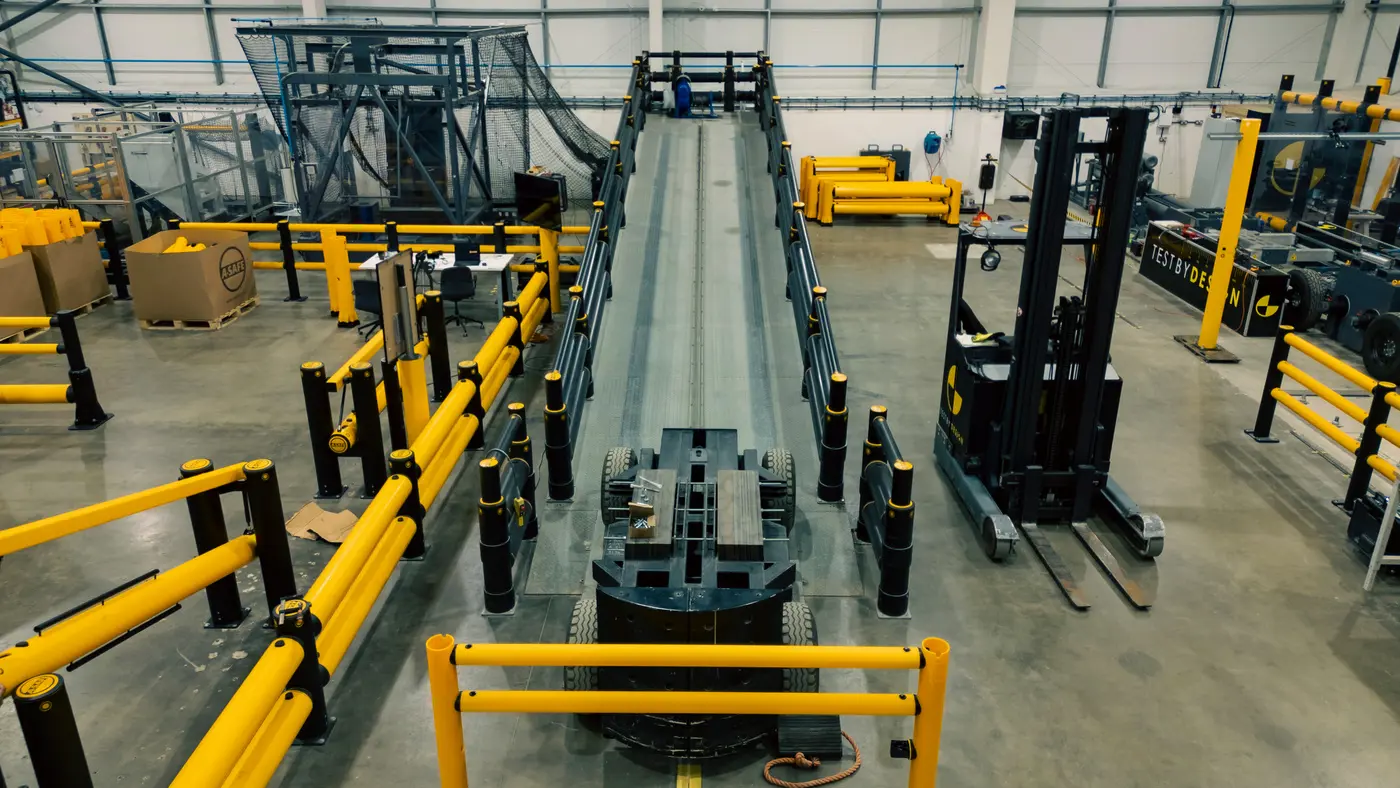
Testing Built Around Real Impacts
Controlled test environments allow impact conditions and product behavior to be observed consistently.

NOT JUST A YELLOW BARRIER
A barrier can copy the shape and color. That does not prove how its material will behave when a paper roll, clamp truck, or forklift makes contact.
In pulp and paper operations, performance must be demonstrated through testing, controlled flex, and recovery after impact.
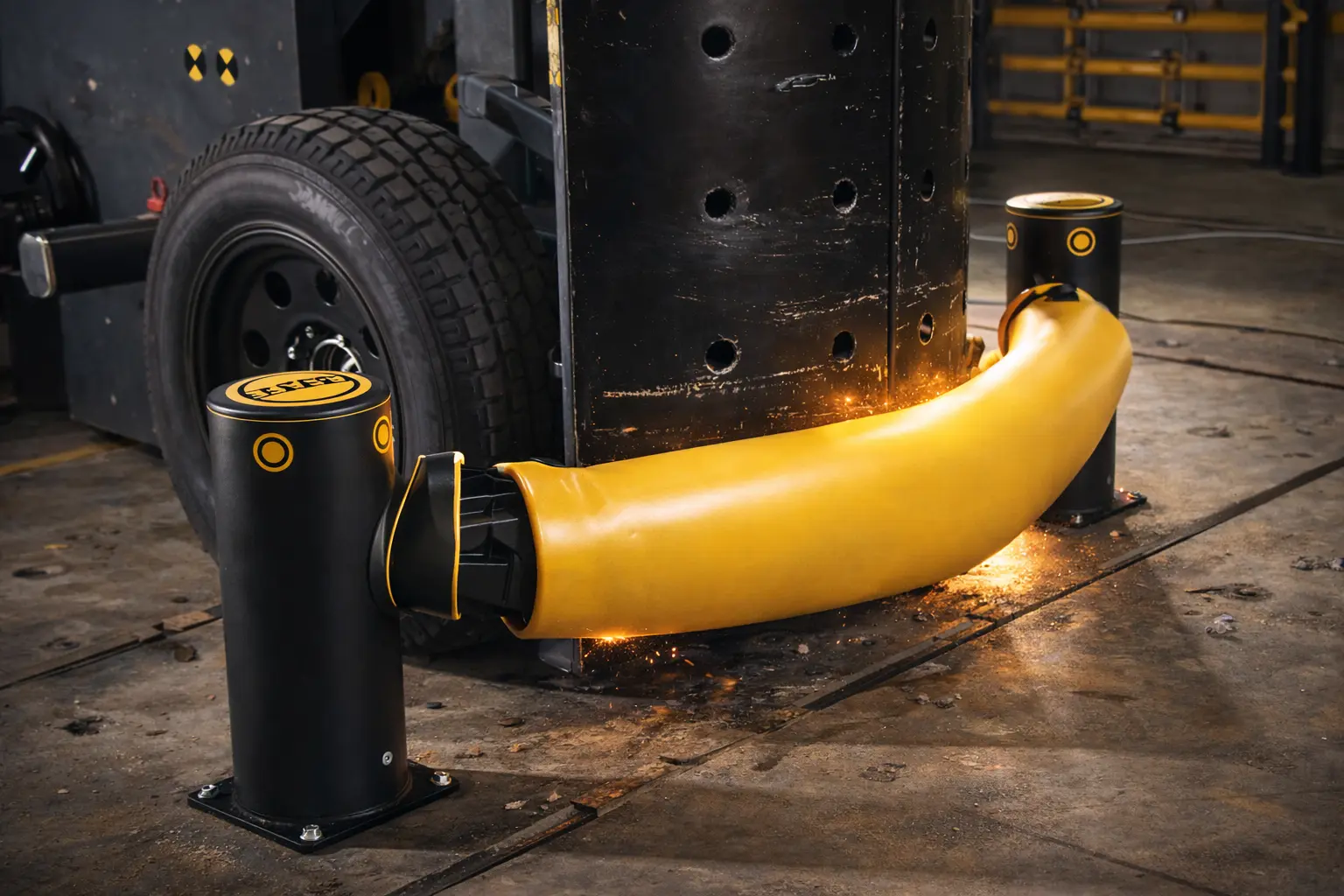
REAL-WORLD IMPACT
Laboratory testing matters because impacts in working facilities are rarely neat or predictable.
Paper rolls and material-handling vehicles create substantial moving loads. The question is not simply whether a barrier moves. It is whether it absorbs energy, protects the surrounding area, and responds as designed.
WHAT TO WATCH
The barrier flexes under contact while maintaining separation between the moving roll and the protected area.
TESTING, VALIDATION & STANDARDS
A single impact demonstration only shows one moment. Engineering validation examines how a barrier flexes, rebounds, and continues to perform through repeated demands.
Controlled test environments allow impact conditions and product behavior to be observed consistently.
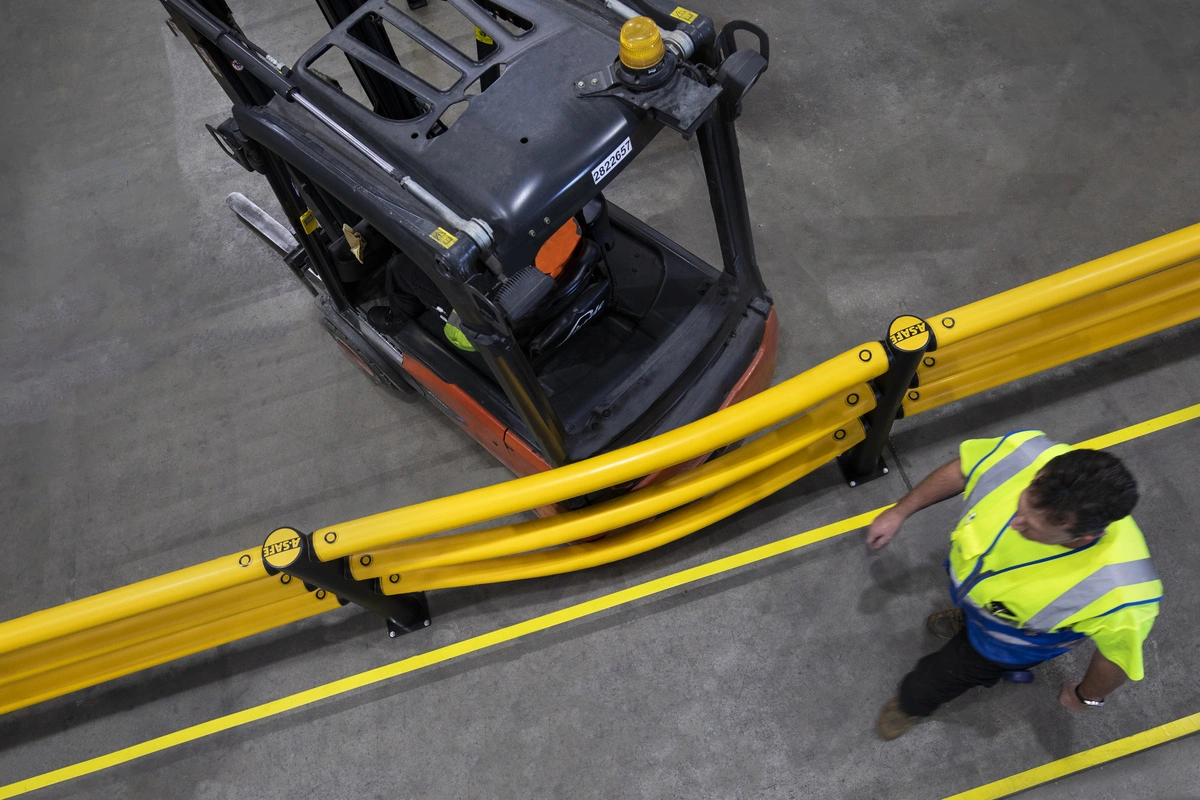
Testing evaluates how the barrier moves under load while maintaining separation from the protected zone.
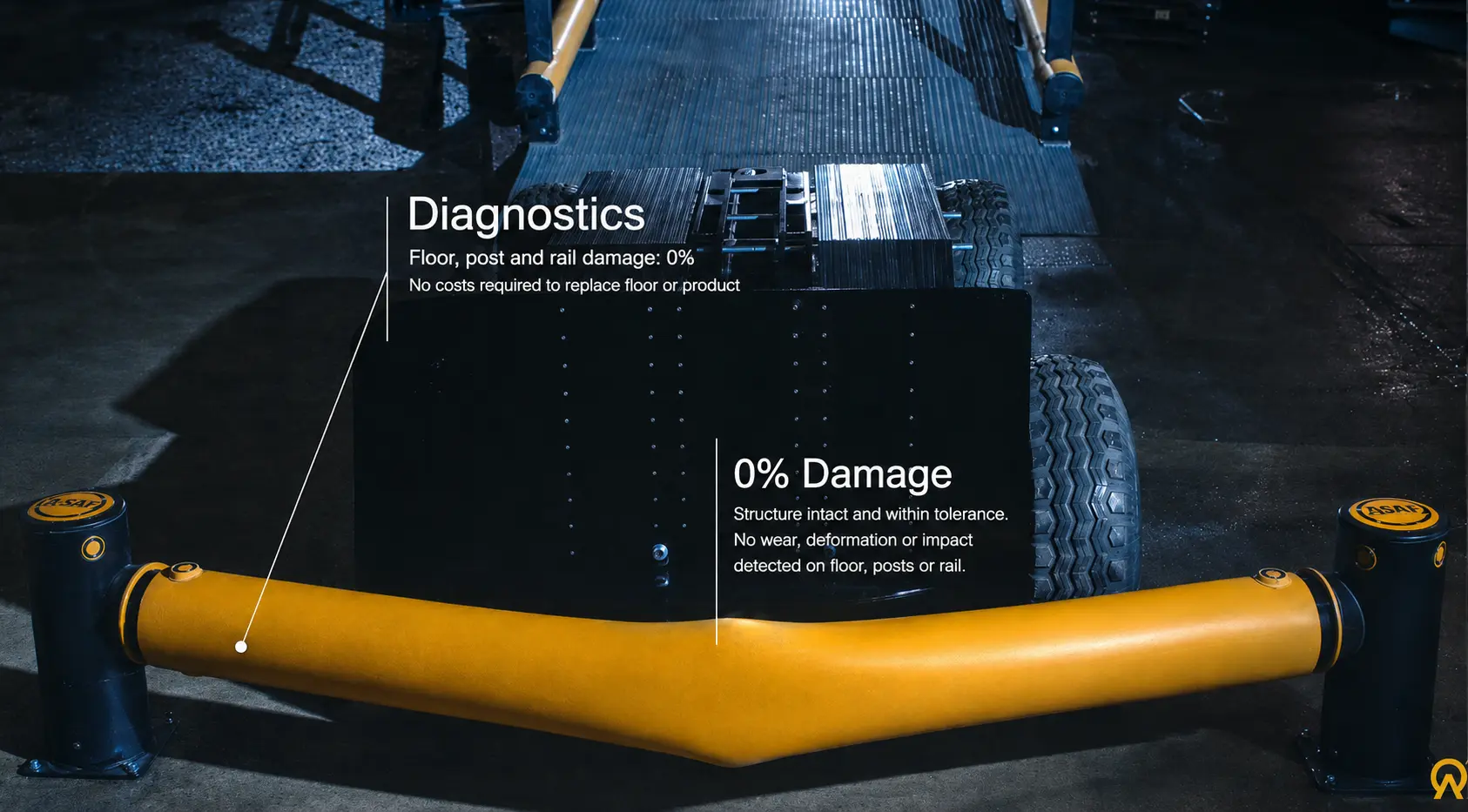
Post-impact inspection helps determine whether the barrier, anchors, and surrounding floor remain within tolerance.
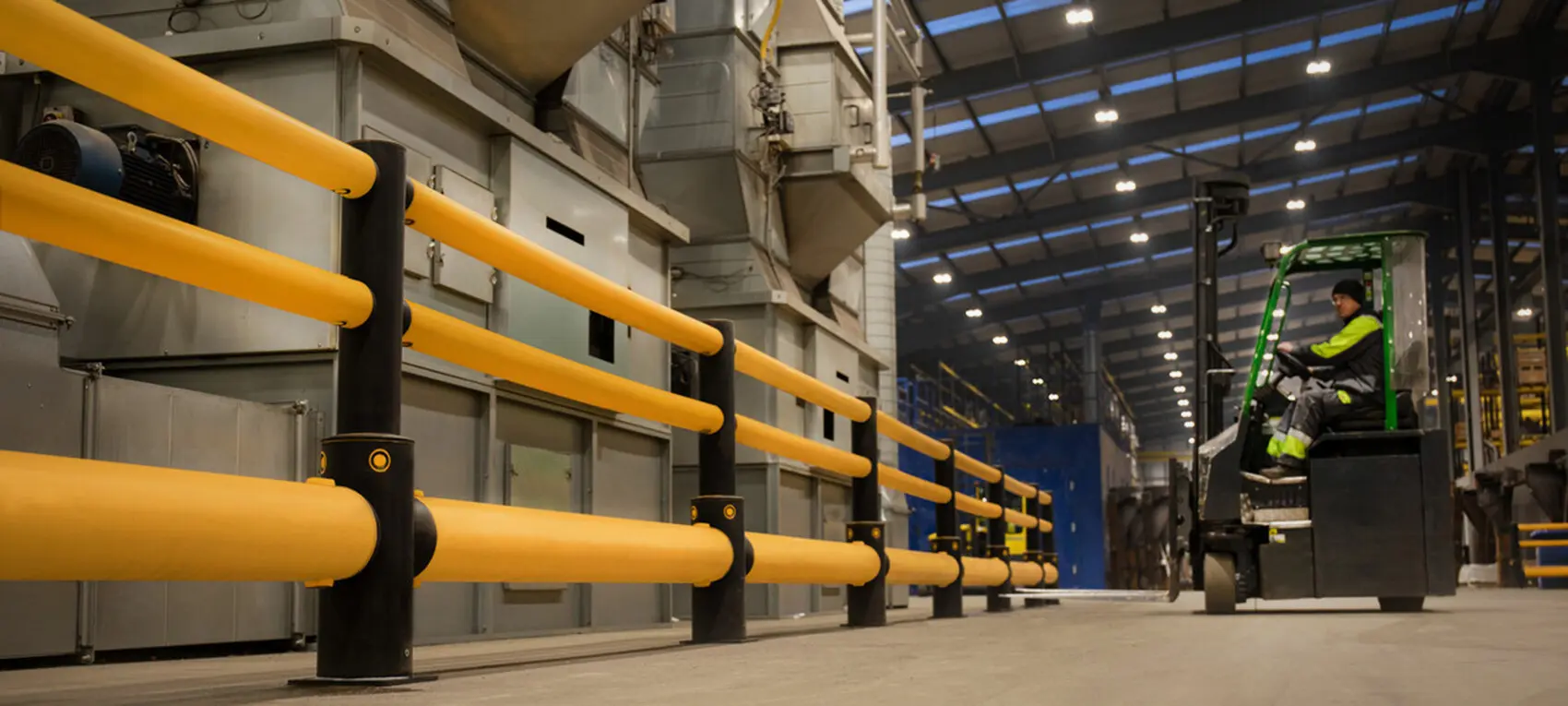
FROM TEST DATA TO DAILY OPERATIONS
Testing is valuable when it leads to more predictable performance around people, vehicles, machinery, and infrastructure.
Controlled energy absorption helps reduce the force reaching machinery and surrounding structures.
Recovery after contact can reduce the need to continually replace damaged barrier components.
Long, continuous barrier runs help maintain clear boundaries between traffic and protected areas.
Validated behavior gives facility teams stronger evidence for protection and maintenance decisions.
APPLICATION-LED PROTECTION
Protection should match the movement, equipment, and exposure found in each part of the operation.
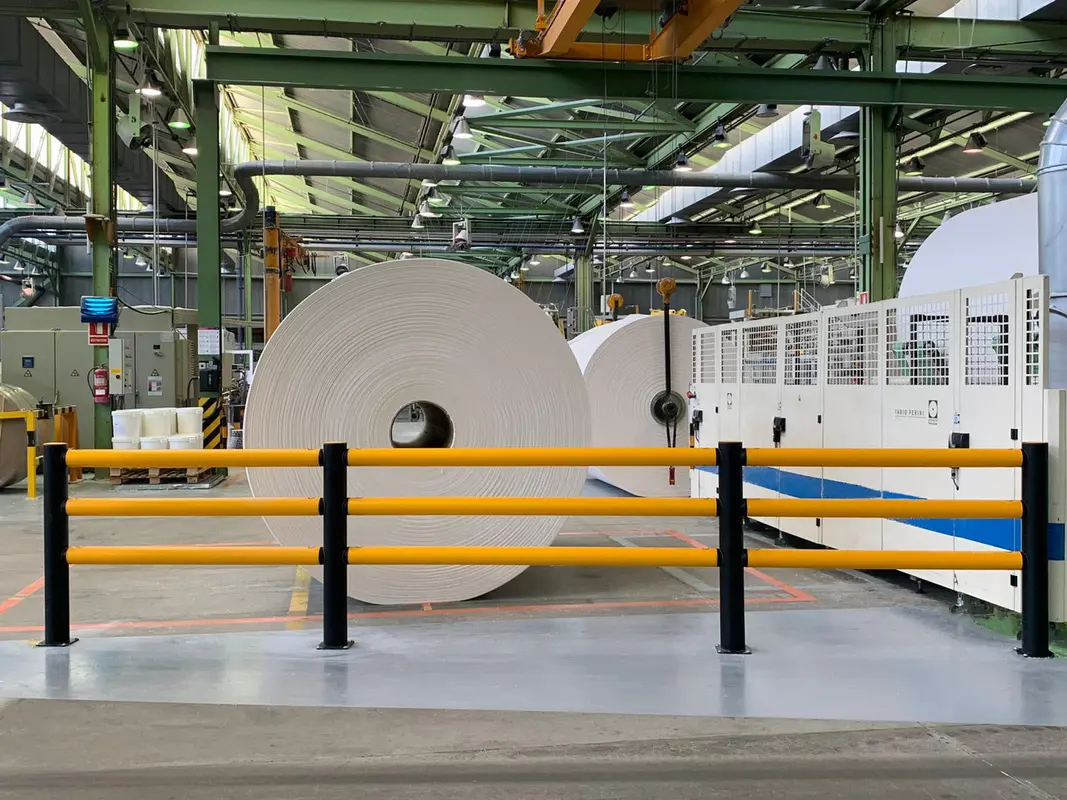
Separate moving rolls and material-handling activity from machinery and restricted areas.
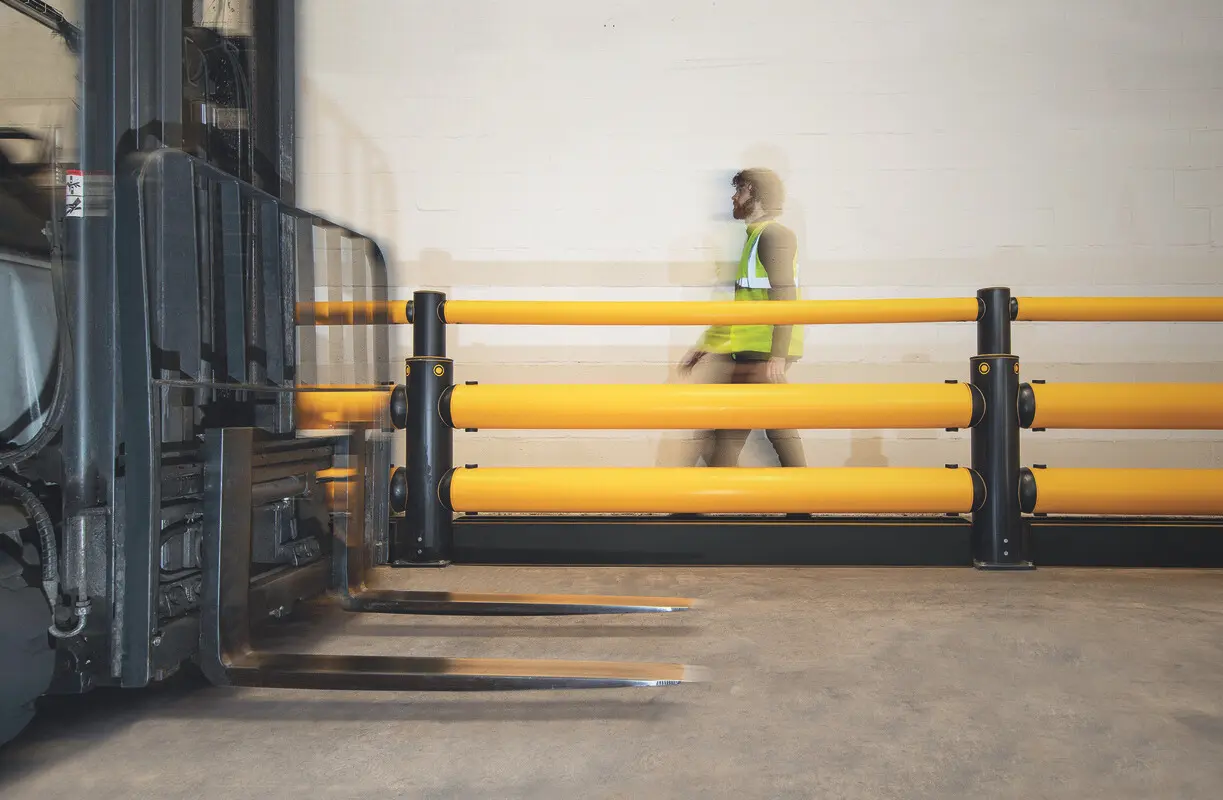
Create a defined boundary between people and vehicle movement in shared operational areas.
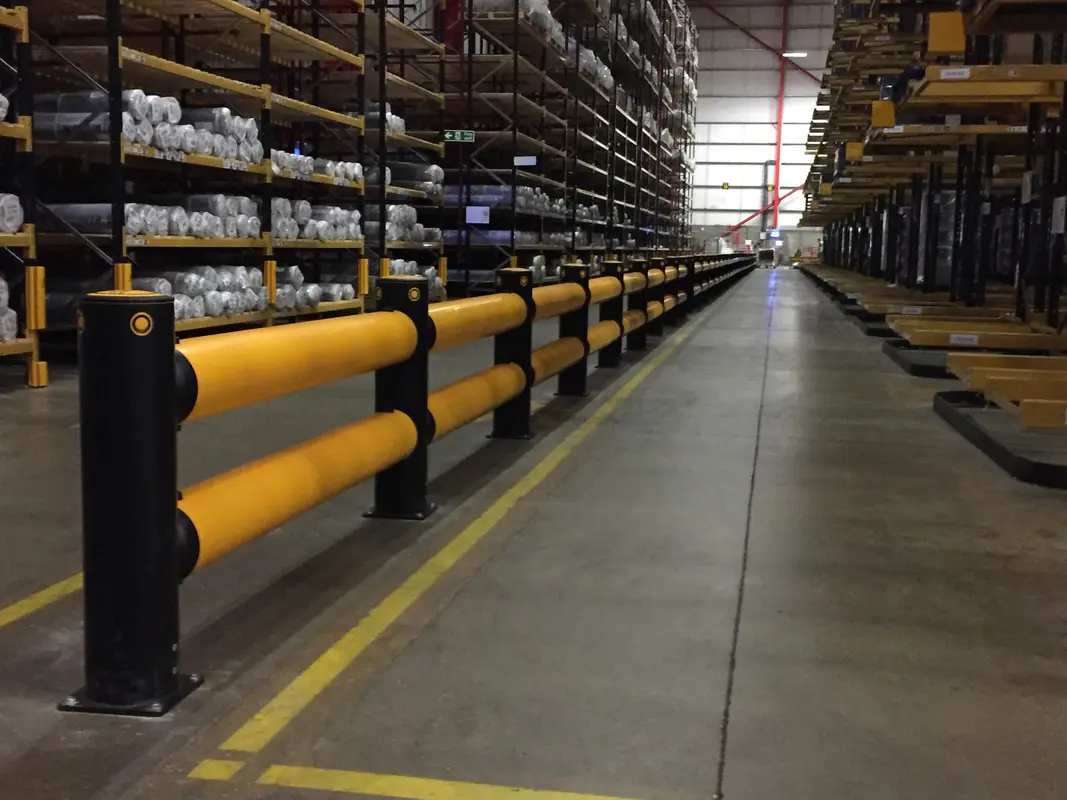
Maintain consistent protection along production routes, storage areas, and building edges.
PROTECTION IN PRACTICE
Impact protection should support movement through the facility without creating new operational obstacles.
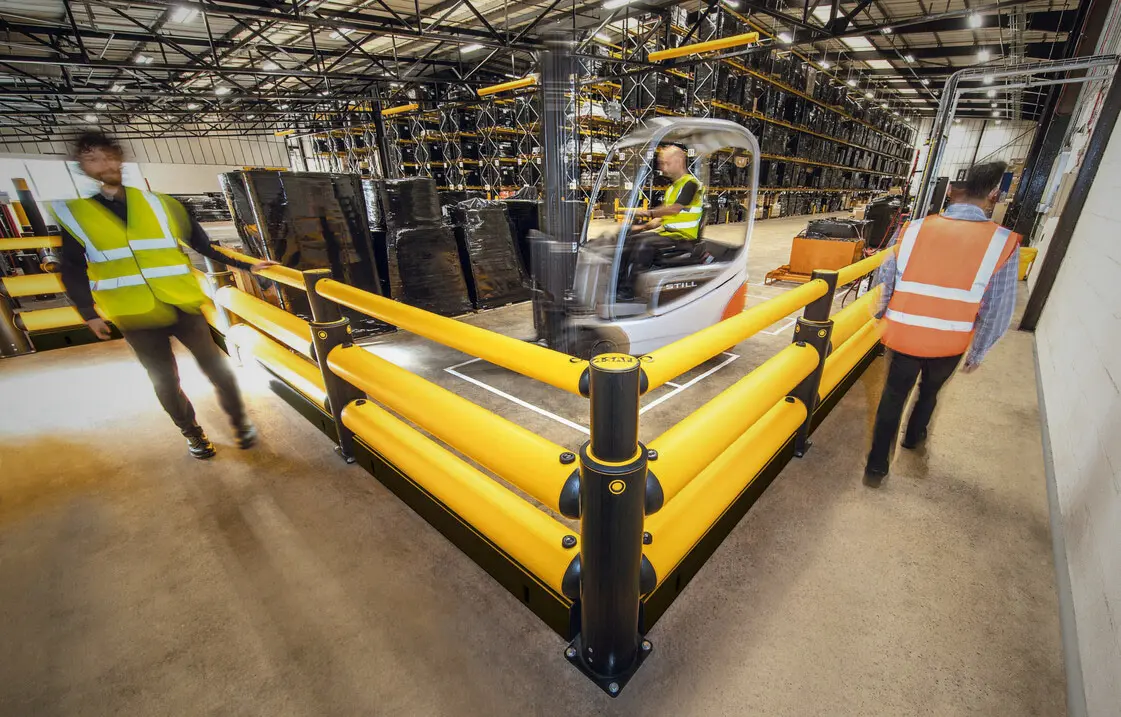
A properly planned system creates visible, continuous separation around active traffic routes while preserving access to production areas.
Clear boundaries between people and vehicles
Protection placed around actual movement patterns
Modular layouts designed for the facility
START WITH YOUR FACILITY
Talk with an A-SAFE expert about the vehicles, paper-roll movement, machinery, and repeated impact risks in your operation.
Continue to the contact form below.
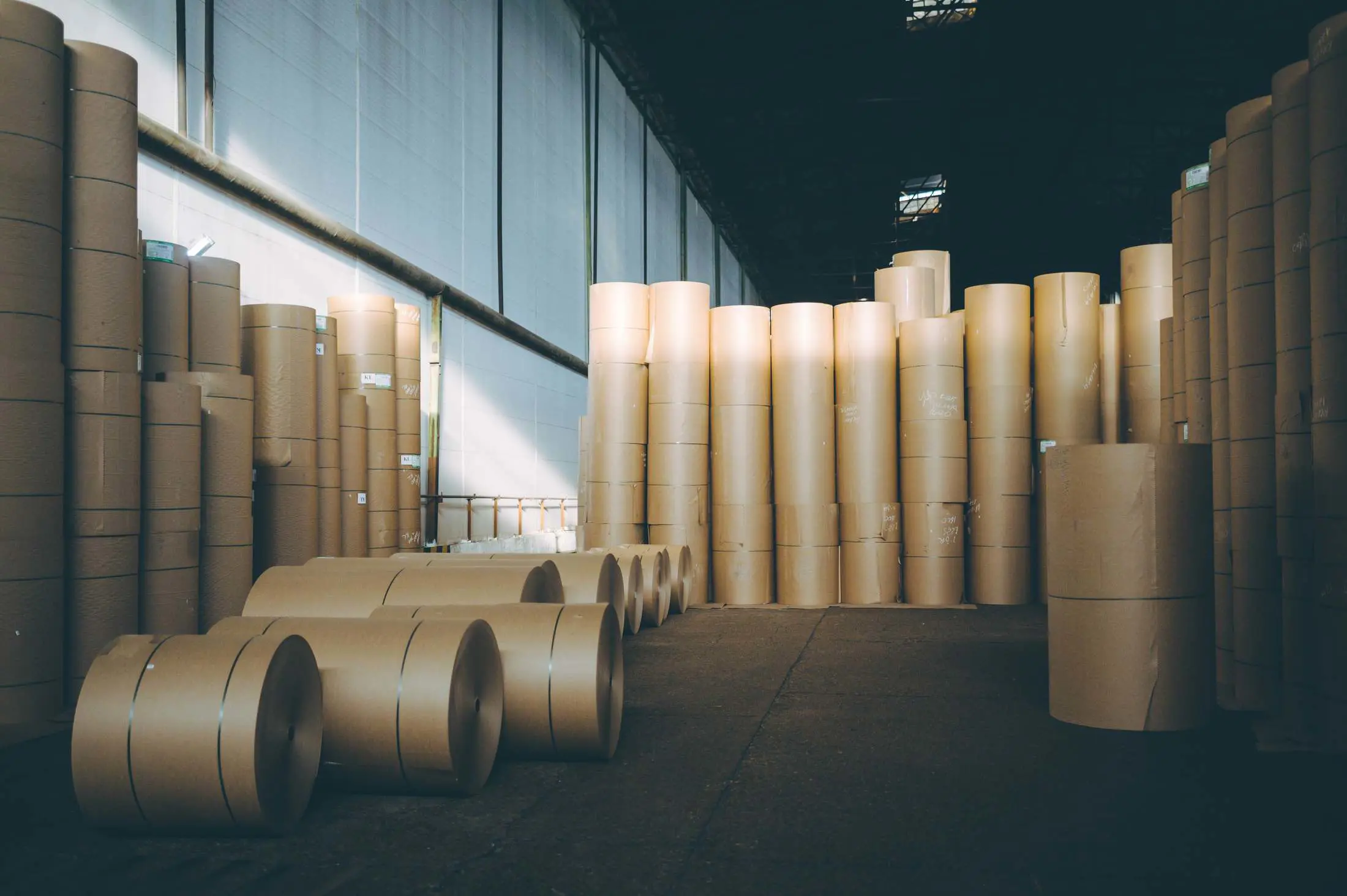
Every pulp and paper facility is different. Share a few details, and an A-SAFE expert will follow up to discuss how the original polymer barrier can reduce damage and downtime in your operation.